Protect Your Product Integrity and Quality
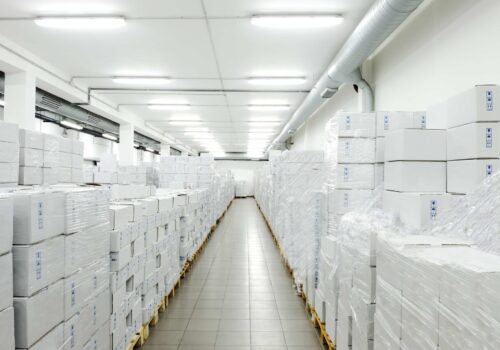
Safeguard your inventory from issues like melting, freezing, cracking, warping or chemical instability with temperature- and climate-controlled warehouse storage. Crown LSP Group offers storage solutions that enable you to control temperature and humidity.
Our temperature-controlled warehouses maintain temperatures between 68 and 77 degrees Fahrenheit, protecting products from both very high and very low temperatures. With this temperature range, we accommodate a wide range of products, from nonperishable foods to cosmetics. Additionally, we offer controlled-humidity warehouse solutions, which are critical for products susceptible to moisture, dryness, mold or dust damage.
Humidity and Temperature-Controlled Warehouse Services for Specific Product Types
Crown LSP Group works with clients across several industries. We partner with companies that produce consumer electronics, pharmaceuticals, cosmetics and medical equipment. Every client is unique, and their inventories require customized solutions and conditions for storage and maintenance — including humidity and temperature-controlled warehouses.
Some of the most common products that require climate-controlled warehouse environments include:
- Food and beverages: Even nonperishable items can suffer from exposure to excessively hot or cold temperatures. Food products can melt, freeze or even spoil completely.
- Electronics and medical equipment: Electrical components can suffer from exposure to heat or cold. Parts shrink and expand, and batteries become less effective. Some medical equipment also requires colder temperatures for sterility. Additionally, fluctuations in humidity can cause condensation, leading to corrosion, short circuits or electrostatic discharge (ESD) issues.
- Cosmetics: Exposure to extreme temperatures can make cosmetics melt or freeze, causing permanent damage to the products. At the same time, high humidity can lead to product separation, microbial contamination or altered textures and scents.
- Supplements: Improper storage of supplements can shorten their shelf life. Gummy supplements may melt in hot environments, while powders could clump in high humidity.
- Pharmaceuticals: Warehouse storage of pharmaceutical supplies is subject to strict government regulations. Fluctuations in temperature can alter the chemical structure of medication, making it less potent or even ineffective. Additionally, inappropriate moisture levels can accelerate chemical degradation, affecting drug potency.
Partner With Crown LSP for Comprehensive Support
You can keep your goods safe in our ambient temperature-controlled warehouses and also benefit from our other offerings. We see our clients as partners and are always looking for solutions to help them cut operational costs without sacrificing quality. We do so by offering:
- Flexible warehousing solutions: Markets can be unpredictable and volatile, which is why we offer short-term warehousing options alongside cost-effective long-term leases. We help you adjust to customer demand, economic shifts and sudden changes in raw material availability or pricing.
- Complete support: We can offer more than just warehousing. As a full-service third-party logistics company, we help our customers overcome a range of logistical challenges — from raw material transport to e-commerce fulfillment.
- Customized service: We offer support where it matters most. By customizing our offerings, we can offer the most cost-effective solutions that accommodate your unique product requirements, order volumes and handling specifications.
Temperature-Controlled Warehouse Services FAQs
For further information about temperature-controlled warehousing, find answers to some common questions we receive about these services below.
Yes, temperature-controlled facilities fall into three categories — frozen, refrigerated and conditioned. Temperature ranges for these categories are as follows:
- Frozen: Below 32 degrees Fahrenheit
- Refrigerated: Between 34 and 40 degrees Fahrenheit
- Conditioned: Between 68 and 70 degrees Fahrenheit
Facilities can adjust temperatures as necessary to suit product demands, but these three categories help a company identify which service best suits its storage needs.
To keep within given temperature ranges, facilities typically use a temperature mapping study to analyze the temperatures throughout the space and correct areas as needed. This approach allows temperature-controlled facilities to deliver trusted temperature control for businesses based on their needs.
A warehouse controls temperature and humidity with heating and cooling technology that regulates the facility’s temperature. Though some consumer goods may not require temperature-controlled storage, such as housewares and electronics, others may need to be kept in a facility with controlled temperature and humidity.
The storage space of a warehouse that is located in a mild or moderate climate typically remains within the temperature range required to keep many products safe. Temperature control may be more essential for a business that needs a food-grade warehouse to protect perishable goods.
A temperature-controlled warehouse is equipped with refrigeration equipment, such as evaporators, condensers, compressors and expansion valves. This equipment should be placed strategically based on the square footage, the amount of time products will be stored in the facility, and the difference between the temperature outside and inside. Temperature-controlled facilities are often constructed with sandwich panels, an insulating element that prevents cold air from being transferred to the outside.
The following storage methods are applicable for temp-controlled facilities and ambient facilities:
- Pallet racks: Several pallet racking storage methods can be present in a temperature-controlled warehouse, such as push-back racking systems, pallet flow racks and selective pallet racks. Pallet racks are a popular storage option because they facilitate direct access to goods for storage and picking tasks. Racking locations can be adjusted to the sizes and characteristics of the products.
- Mobile racks: A mobile racking system provides suitable storage for freezer warehouses or cold storage. As a compact solution, mobile racking systems reduce energy consumption. These mobile racks include safety devices like interior and exterior barriers to guarantee safety for the goods, operators and facility.
- Stacker cranes: In a temperature-controlled warehouse, a stacker crane can be installed to automatically move goods in and out of storage aisles. This automation increases the speed of product movements and reduces operators’ exposure to low temperatures for long periods of time. Facilities with stacker cranes offer agility in the inflow and outflow of goods along with accurate product control.
- Semi-automated pallet shuttles: A semi-automated pallet shuttle is a compact storage solution that features a shuttle to automatically move the goods within the racks. This system can speed up product movements in the channels and optimize storage space to reduce the energy consumption needed to operate the warehouse at a controlled temperature. This storage solution can increase the storage capacity in the facility.
While racking is typically used in warehouses, floor stacking is also an excellent method, especially for bulk and fast-moving product.
Regulations vary and depend on the industry and product involved. The Food and Drug Administration (FDA) imposes regulations for the safe storage of different temp-controlled goods, such as produce, pre-packaged refrigerated foods and more. These unique temperature regulations for different food products define the appropriate storage solutions. Additionally, pharmaceutical companies may have their own strict guidelines that set expectations for storage.
A climate-controlled warehouse goes a step further than a temperature-controlled warehouse. A climate control system seeks to regulate both the warehouse’s temperature and humidity. Though many businesses may not need a climate-controlled warehouse for storage, others have more sensitive products that require additional protection. Storage for certain health care products, like pharmaceuticals or vaccines, may require climate control to ensure efficacy and safety.
Few facilities can offer full control of climate and humidity, so consider your needs when you seek to lease warehouse space.
Begin Your Journey with Crown LSP’s Premier Temperature-Controlled Warehousing
Let Crown LSP Group store and monitor your goods in our temperature-controlled warehouse facilities. Ready to get started? Request a quote online or contact us to speak with a team member who can help build a custom solutions package for your business.